This is a subtitle for your new post
HVAC Marketing When Shipments Are Down: What to Do Now
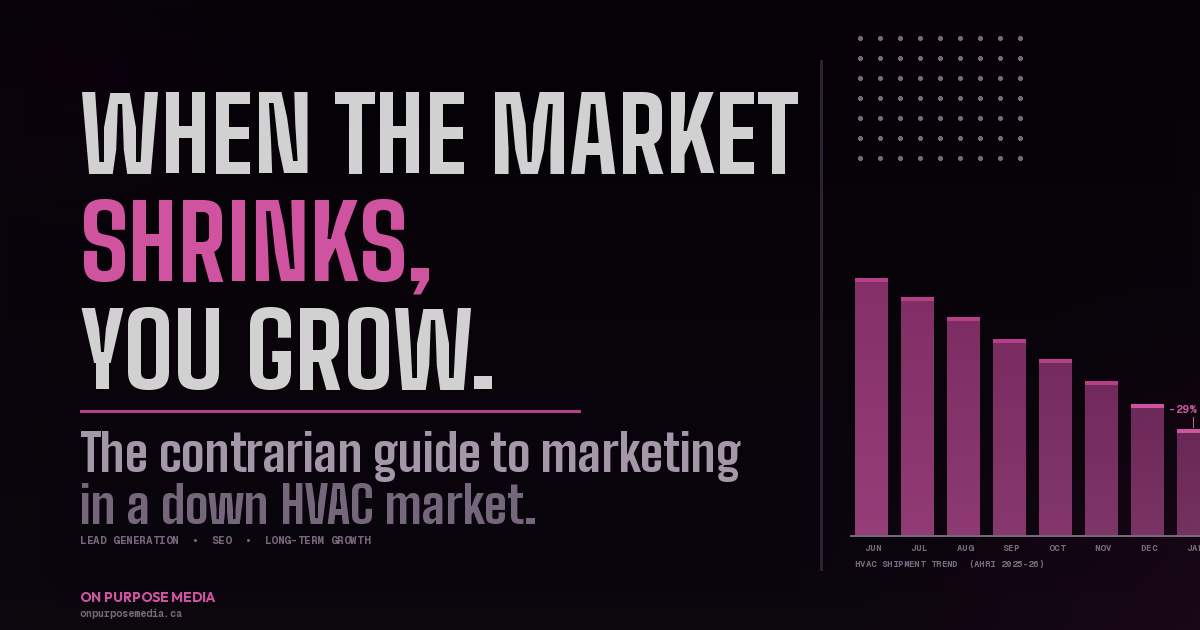
The data is out. HVAC shipments declined for the eighth straight month. January was down 29 percent year-over-year. That is not a blip. That is a sustained contraction.
Every contractor in North America is seeing the same numbers. Fewer systems moving. Fewer installs. Fewer emergency calls because people are holding off.
So what do most businesses do? They panic. They cut the one thing that keeps their phone ringing.
That is the wrong move. Here is why.
The Math Contractors Miss
When the market contracts 29 percent, it contracts for everyone. Your competitors are dealing with the same slow season. The same soft demand. The same anxious homeowners delaying replacements.
The difference is not the market. The difference is who stays visible when demand does show up.
Think about the homeowner whose 15-year-old system dies in February. They are not shopping around. They type "HVAC repair near me" and they call whoever shows up. If you pulled your Google ad budget or let your SEO stagnate, that is not going to be you.
What Happens When You Pull Back
Contractors who cut marketing during down markets rarely recover quickly. Here is the pattern:
First 30 days: No visible change. The existing rankings hold.
Days 60 to 90: Google starts to notice reduced activity. Organic rankings soften. Your competitors who kept posting, kept building links, kept running ads start to move past you in local results.
Month 4 and beyond: When the seasonal swing comes and demand picks up, you are not in the top three anymore. You are rebuilding from a weaker position while the contractors who stayed visible are already booking out two weeks.
The businesses that held steady during the contraction own the recovery.
What You Should Be Doing Right Now
Down markets are not the time to disappear. They are the time to own the space everyone else vacated.
Here is the practical playbook:
Protect your Google Business Profile. Keep reviews coming in. Post updates. Answer questions. The GBP is free and it does not go stale on its own, but your management of it does.
Maintain your content cadence. If you were posting twice a month, keep posting twice a month. Search engines reward consistency. The contractors who stop publishing lose authority slowly, then all at once.
Do not kill paid ads, right-size them. If you are paying for keywords that convert during peak season, evaluate the conversion rate now. Reduce budget where the ROI is not there. But do not turn it all off. Maintain visibility for the jobs that are still being booked.
Double down on local signals. Citations, backlinks from local publications, community sponsorships. These take time to build and they pay off when demand returns.
Improve what you already have. Slow season is the best time to audit your website, update your service pages, fix your page speed, and build the content you have been putting off. When the market picks back up, you will already be in a stronger position.
The 2008 Lesson
This is not the first contraction the trades have been through. In 2008 and 2009, the contractors who maintained their marketing while competitors went dark came out of the recession with dominant local positions. Some of those businesses still benefit from that period today.
The ones who cut everything spent the following years clawing back ground they never needed to lose.
The Bottom Line
Twenty-nine percent is a hard number to look at. But the market will turn. It always does. The question is whether you will be positioned to capture that demand when it comes back, or whether you will be starting from scratch.
Your competitors are making the same decision you are right now. Some of them are going quiet. That is an opportunity.
Do not go quiet.
On Purpose Media works with home service businesses across North America to maintain visibility when the market makes it tempting to pull back. If you want to look at what your marketing should be doing in a down market, book a call with our team.